
Marijuana is illegal in Wisconsin. What about substances like delta-8, delta-9, delta-10, and CBD?
Years after the federal legalization of hemp and hemp-derived products, Wisconsinites across the state have started to see advertisements for “legal weed.” Once they investigate these ads, they’re sometimes surprised to discover that various companies across the United States are prepared to ship these products directly to Wisconsin. However, plenty of smoke and mirrors are usually at play, and these companies typically use generic, confusing terms such as “weed,” “legal weed,” or “the good stuff” (our favorite).
What are these companies actually selling, and how is this legal? The short answer is that these advertisements and the products they’re selling are federally legal under the 2018 Farm Bill. These products are (or should be) all derived from hemp containing no more than 0.3% delta-9 THC by dry weight. This blog post digs into the details to provide Wisconsinites with answers to questions they may have regarding this significant change in federal law.
However, it’s important to understand that as of February 24, 2025, marijuana remains illegal in Wisconsin. Enforcement varies by location. In certain cities, such as Madison, local law enforcement chooses not to prosecute simple possession of marijuana cases, so long as no aggravating circumstances are present. Other cities throughout the state (such as Milwaukee) treat a first offense as a ticketable ordinance violation without criminal penalties. Still others, such as Wausau, will charge possession as a misdemeanor. A second offense for marijuana possession is a felony throughout Wisconsin and can result in prison time.
If you’re facing any drug charges, contact Van Severen Law Office, S.C. at (414) 270-0202 to see how we can help. Our firm focuses 100% of its resources on defending clients throughout Wisconsin who are facing criminal charges.
[/vc_column_text][/vc_column][/vc_row]


How it all started: Agricultural Improvement Act of 2018 (2018 farm bill)
Farm bills in the United States are comprehensive omnibus bills passed every five to six years. They establish agricultural and food policy for the federal government. The 2018 Farm Bill (Agricultural Improvement Act of 2018) legalized industrial hemp and its derivatives at the federal level. Specifically, hemp plants containing no more than 0.3 percent delta-9 THC (tetrahydrocannabinol) by dry weight were removed from the definition of marijuana in the Controlled Substances Act. 21 U.S.C. § 802(16)(B), in its current form, states:
(B) The terms “marihuana” and “marijuana” do not include –
i. hemp, as defined in section 1639 of title 7; or
ii. the mature stalks of such plant, fiber produced from such stalks, oil or cake made from the seeds of such plant, any other compound, manufacture, salt, derivative, mixture, or preparation of such mature stalks (except the resin extracted therefrom), fiber, oil, or cake, or the sterilized seed of such plant which is incapable of germination.
Why 0.3 percent THC? This threshold is not new law, but instead derives from section 297A of the Agricultural Marketing Act of 1946, which provides the definition of hemp (and requires no more than 0.3% delta-9 THC by dry weight):
(1) HEMP.—The term ”hemp” means the plant Cannabis sativa L. and any part of that plant, including the seeds thereof and all derivatives, extracts, cannabinoids, isomers, acids, salts, and salts of isomers, whether growing or not, with a delta-9 tetrahydrocannabinol concentration of not more than 0.3 percent on a dry weight basis.
What about the tetrahydrocannabinol derived from hemp?
So, the law no longer considers hemp to be marijuana, but what about the intoxicating compounds found within hemp? Even if they comprise only 0.3% of the dry weight? Section 12619 of the 2018 Farm Bill amended section 102(16) of the Controlled Substances Act (21 U.S.C. 812) as follows:
(b) TETRAHYDROCANNABINOL.—Schedule I, as set forth in section 202(c) of the Controlled Substances Act (21 U.S.C. 802(16)), is amended in subsection (c)(17) by inserting after ”Tetrahydrocannabinols” the following: ”, except for tetrahydrocannabinols in hemp [emphasis added] (as defined under section 297A of the Agricultural Marketing Act of 1946)”.
What does this change? This modification focuses on tetrahydrocannabinol (THC), which was a prohibited, controlled, and scheduled substance when derived from marijuana. The new law removes THC derived from hemp from the list of Schedule I controlled substances.
In other words, the tetrahydrocannabinols found in hemp are no longer scheduled, illegal substances. Interestingly, the tetrahydrocannabinols in marijuana—even though they’re chemically identical, just in different concentrations—remain illegal. Put simply: psychoactive THC is federally legal, so long as it’s derived from hemp that contains no more than 0.3% delta-9 THC by dry weight.
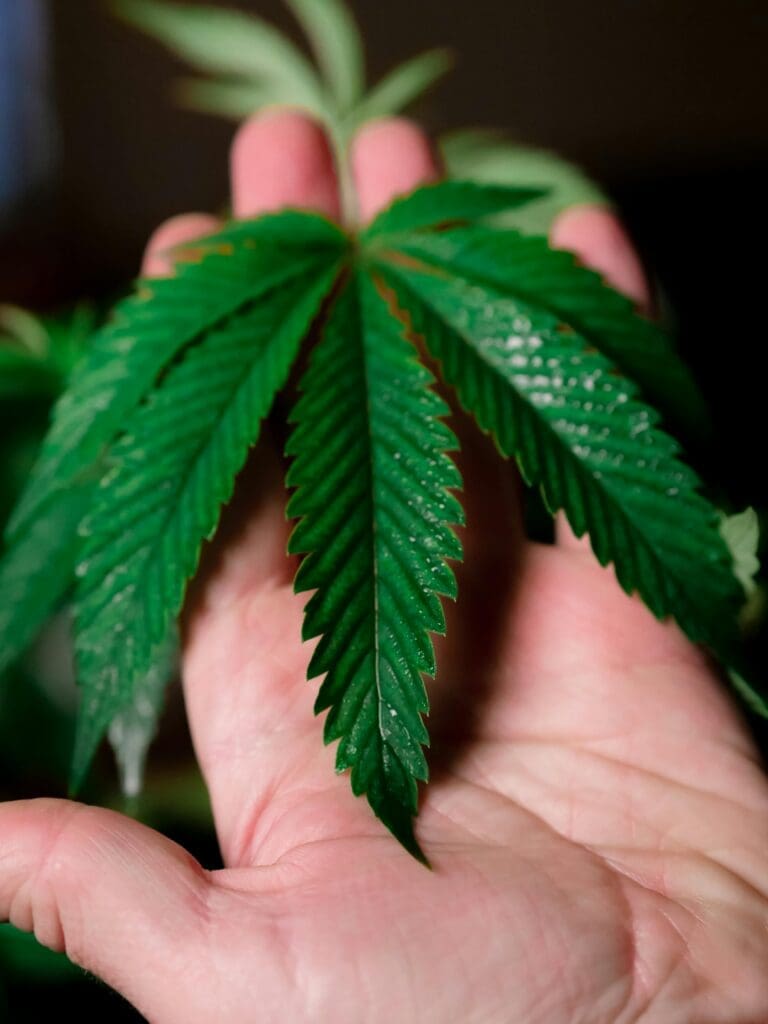
How does hemp compare to marijuana? Does it contain psychoactives such as delta-8 and delta-9?
Hemp and marijuana both belong to the same species, Cannabis sativa. The major difference is that hemp contains less than 0.3% delta-9 THC by dry weight in its flowers and plant material. Hemp plants are typically taller and contain more fiber in their stalks, which is why they’re often used to make textiles and are sometimes included in various forms of reinforced concrete. Marijuana plants are shorter, resemble bushes, and have dense leaves and buds. The delta-9 THC content in marijuana by dry weight ranges between 0.3% and around 30%.
This might seem confusing. What happens when a cannabis plant exceeds 0.3% delta-9 THC? It’s no longer legally classified as hemp. Instead, it’s non-hemp cannabis, or marijuana, and remains illegal under Wisconsin law. Think of the difference between marijuana and hemp as a classification issue based on THC content. They’re the same plant species—one just contains significantly more delta-9 THC than the other.
Delta-9 THC is the primary psychoactive component of cannabis. There are 483 known compounds in the plant, including at least 65 other cannabinoids, such as cannabidiol (CBD). Delta-9 THC, cannabidiol (CBD), delta-8 THC, and cannabinol (CBN) are four of the most studied and recognized compounds in the plant. Various other tetrahydrocannabinols, such as delta-8 and delta-10, are also psychoactive but impact users differently and typically more mildly than delta-9 THC.
What is cannabidiol, and does it contain psychoactives such as delta-9?
Cannabidiol, commonly known as CBD, was the first cannabis-derived product to become legally available in Wisconsin. CBD is non-intoxicating and will not cause you to get “high.” Importantly, CBD can be derived from either hemp or marijuana. Pure CBD isolate contains no tetrahydrocannabinol, though some CBD products may contain trace amounts of THC depending on the extraction method and source material.
While CBD won’t intoxicate you, it does have several important uses. CBD is frequently used to address chronic pain, anxiety, inflammation, and insomnia. Research has shown that CBD works by interacting with receptors in the endocannabinoid system, which helps regulate pain, mood, and memory, in addition to supporting many other physiological and cognitive functions.
CBD does not occur in concentrated form naturally. It’s extracted from the cannabis plant through processes where plant material is either soaked in or treated with solvents. This strips the cannabinoids from the plant. Once the extraction is complete, the remaining liquid undergoes an evaporation and heating process, leaving behind cannabinoid concentrates in oil form.
Many products advertised as containing THC also contain CBD. Others contain one or the other, often combined with various other cannabinoids and compounds.
What about synthetic THC?
K2 and Spice are two of many trade names used for synthetic designer drugs intended to mimic THC. These synthetic cannabinoids are often marketed and sold under the guise of “herbal incense” or “potpourri.”
State public health and poison control centers have issued warnings in response to adverse health effects associated with synthetic cannabinoid use. These adverse effects have included tachycardia (elevated heart rate), elevated blood pressure, unconsciousness, tremors, seizures, vomiting, hallucinations, agitation, anxiety, pallor, numbness, and tingling.
Synthetic cannabinoids are powdered chemicals that are typically mixed with solvents and sprayed onto plant material, then sold in colorful, appealing packets. The exact chemical composition of these products constantly changes as manufacturers attempt to evade drug enforcement laws.
Importantly, the 2018 Farm Bill did not legalize synthetic THC or synthetic cannabinoids. These remain controlled substances under federal law and are illegal in Wisconsin.
Wisconsin’s response to the 2018 farm bill:
So far we’ve discussed federal laws regarding hemp. But does Wisconsin itself prohibit the use or possession of hemp and hemp-derived cannabinoids like delta-8, delta-9, and delta-10 THC? First, it’s important to recognize that the 2018 Farm Bill does not preempt state laws that regulate hemp production more stringently or prohibit its production within that state. In other words, states can regulate and restrict hemp production more than federal law requires. However, states may not prohibit the transportation or shipment of hemp or hemp products into or through their borders.
Section 961.01(14) of the Wisconsin Statutes defines marijuana. It explicitly states that “marijuana” does not include hemp (as defined in section 94.55 of the Wisconsin Statutes, which mirrors the federal definition). Further, section 961.14(4)(t) of the Wisconsin Statutes indicates that tetrahydrocannabinols found within hemp are not a Schedule I controlled substance.
Wisconsin law mirrors the changes that the 2018 Farm Bill created. The use, possession, and consumption of hemp-derived THC products is legal in Wisconsin, provided the products are derived from hemp containing no more than 0.3% delta-9 THC by dry weight and comply with all applicable state and federal regulations.
A warning: drunk driving and cannabis use:
Certain substances are legal to use and possess, but when used in the wrong situation, can lead to criminal liability. Consider operating while intoxicated (OWI) or operating with a prohibited alcohol concentration (PAC). It’s illegal to operate a vehicle while under the influence of alcohol or with a blood alcohol concentration of 0.08 or higher. What about operating a vehicle while under the influence of THC?
Section 346.63 of the Wisconsin Statutes prohibits drunk driving and driving under the influence of an intoxicant. Section 346.63(1)(am) of the Wisconsin Statutes deals specifically with operating a vehicle with a detectable amount of a restricted controlled substance, including THC. The law is clear: any detectable amount of delta-9 THC in a driver’s blood constitutes operating with a restricted controlled substance and will lead to criminal charges. Under no circumstance can drivers in Wisconsin legally operate their vehicles with any amount of THC in their system.
Delta-9 THC can remain detectable in the blood of moderate users for approximately 3 days. Heavy users may have a detectable amount of THC in their blood for up to 30 days or more. Even if you didn’t use THC the day you’re driving, or even several days before, you could still be arrested for operating with a restricted controlled substance.
Wisconsin’s zero-tolerance policy regarding THC and driving also applies to various other criminal charges, such as causing injury by operating while intoxicated and homicide by intoxicated use of a vehicle. Any detectable amount of THC in your blood is sufficient to support these serious criminal charges.
Can cops tell the difference between hemp and marijuana?
Things become complicated once law enforcement gets involved. So what happens when police find legal hemp in your car? Unfortunately, hemp and marijuana cannot be distinguished by appearance, odor, or by the Duquenois-Levine color test (a standard cannabis screening test used by law enforcement).
A newer test called the Cannabis Typification test (also called the 4-aminophenol color test or 4-AP test) may assist in this determination. However, the 4-AP test cannot determine the concentration of delta-9 THC. Instead, the test results appear as colors based on the ratios of CBD and THC present in the tested material. A positive result for hemp (CBD-rich cannabis) will appear pink or red. A positive result for marijuana (THC-rich cannabis) will appear blue. Inconclusive tests show a purple color.
Law enforcement officers can only use the 4-AP test on plant material. They cannot use it on edibles, such as gummies. But even if they could, the results would likely show purple, as many edibles contain either pure THC or a combination of THC and CBD. Officers cannot differentiate between a legal, hemp-derived edible and one created from marijuana based on appearance or field testing alone.
While this isn’t pleasant advice, it’s practical: if you’re going to use hemp-derived products, delta-8 THC, delta-9 THC, or any other legal cannabinoid that resembles marijuana, consume it in the safety and privacy of your own home. If you’re in public and have hemp products on your person or in your vehicle, keep them in the original packaging with any available lab reports or certificates of analysis. While this won’t guarantee protection from arrest, it will significantly help a criminal defense attorney if you face criminal charges.
Frequently asked questions about hemp and THC laws in Wisconsin
Is delta-9 THC legal in Wisconsin?
Yes, delta-9 THC is legal in Wisconsin when it’s derived from hemp containing no more than 0.3% delta-9 THC by dry weight. Hemp-derived THC products, including delta-8, delta-9, and delta-10 THC, are legal to possess and use under both federal and Wisconsin law. However, marijuana (cannabis containing more than 0.3% delta-9 THC) remains illegal in Wisconsin.
Can I drive after using hemp-derived THC products?
No. Wisconsin has a zero-tolerance policy for driving with any detectable amount of THC in your blood, regardless of whether it came from legal hemp or illegal marijuana. Delta-9 THC can remain detectable in your blood for 3 days for moderate users and up to 30 days or more for heavy users. You can face OWI charges even if you used a legal hemp product days or weeks before driving.
Can police tell the difference between legal hemp and illegal marijuana?
No, not easily. Hemp and marijuana cannot be distinguished by appearance, smell, or standard field tests like the Duquenois-Levine test. While law enforcement may use the 4-AP (Cannabis Typification) test on plant material, this test shows color-based results and cannot determine exact THC concentrations. Officers cannot field-test edibles like gummies to distinguish legal hemp products from marijuana products.
What should I do if I’m charged with marijuana possession but had legal hemp?
Contact an experienced criminal defense attorney immediately. A criminal defense lawyer can request laboratory testing to prove your product was legal hemp, challenge the evidence, and protect your rights. Keep your hemp products in original packaging with lab reports when possible to help establish their legality.
Facing criminal charges involving THC?
Understanding your rights under Wisconsin’s evolving cannabis laws is crucial, but mistakes and misunderstandings happen. Even well-intentioned individuals can find themselves facing criminal charges—whether due to confusion about what’s legal, law enforcement’s inability to distinguish hemp from marijuana, or Wisconsin’s strict zero-tolerance policy for driving with any THC in your system.
Van Severen Law Office, S.C. is a criminal defense law firm based in Milwaukee, Wisconsin, with satellite offices throughout the state. We regularly represent individuals facing drug charges and OWI cases in counties across Wisconsin. Our experienced criminal defense attorneys understand the complexities of Wisconsin’s cannabis laws and know how to build strong defenses for our clients.
If you’re facing charges related to marijuana, hemp, THC, or any drug-related offense, don’t navigate this alone. We offer free consultations to potential clients. Contact us 24/7 at (414) 270-0202 to discuss your case and learn how we can defend your rights.