
Wisconsin Operating While Intoxicated Defense Attorneys
Are you facing charges for drunk driving or drugged driving? Talk to one of our OWI defense lawyers now.
Van Severen Law Office, S.C. represents defendants facing operating while intoxicated charges throughout Wisconsin. A large portion of the cases we work on involve drunk driving, but over the last few years we’ve seen a steady increase in the number of drugged driving cases. We represent clients facing both.
With offices in Milwaukee, Waukesha, and Ozaukee counties, we’re prepared to help our clients address these serious charges.
What makes OWI defense different?
Not every criminal defense attorney has the skills and knowledge necessary to effectively defend individuals facing operating while intoxicated charges in Wisconsin. From appearing in municipal court instead of circuit court to understanding administrative suspensions, refusal hearings, and the timing involved in each, OWI defense is different from other areas of criminal defense. The OWI defense attorneys at Van Severen Law Office, S.C. have this knowledge. We regularly represent drivers facing both drugged driving and drunk driving charges throughout Wisconsin.
Prosecutors in Wisconsin typically charge defendants with OWI, which stands for operating while intoxicated. Other jurisdictions rely upon DWI (driving while intoxicated), DUI (driving under the influence of an intoxicant), and OUI (operating while under the influence of an intoxicant).
Penalties for operating while intoxicated in Wisconsin
A first-offense OWI is a non-criminal offense, but penalties after that escalate quickly. All criminal operating while intoxicated charges include mandatory minimum incarceration penalties.
1st — ForfeitureFirst offense OWI
- Fine: $150 to $300, plus an OWI surcharge and court costs
- Incarceration: none
- License revocation: 6 to 9 months
- Ignition interlock: required for 12 months if alcohol concentration was 0.15 or higher
- Occupational license: available immediately
- Fine: $350 to $1,100, plus an OWI surcharge and court costs
- Incarceration: mandatory minimum 5 days jail; up to 6 months
- License revocation: 12 to 18 months, plus the length of confinement
- Ignition interlock: required for 12 to 18 months
- Occupational license: available after 45 days
- Fine: $600 to $2,000, plus an OWI surcharge and court costs
- Incarceration: mandatory minimum 45 days jail; up to 12 months
- License revocation: 2 to 3 years, plus the length of confinement
- Ignition interlock: required for 1 to 3 years
- Occupational license: available after 45 days
- Fine: $600 to $10,000, plus an OWI surcharge and court costs
- Incarceration: mandatory minimum 60 days; up to 6 years
- License revocation: 2 to 3 years, plus the length of confinement
- Ignition interlock: required for 1 to 3 years
- A fourth or subsequent OWI could trigger a lifetime revocation of your driver license. We explain more below.
5th & 6th — Class G felonyFifth or sixth offense OWI
- Fine: $600 to $25,000, plus an OWI surcharge and court costs
- Incarceration: mandatory minimum 18 months in prison; up to 10 years
- License revocation: 2 to 3 years, plus the length of confinement
- Ignition interlock: required for 1 to 3 years
- A fourth or subsequent OWI could trigger a lifetime revocation of your driver license. We explain more below.
7th, 8th, & 9th — Class F felonySeventh, eighth, or ninth offense OWI
- Fine: up to $25,000, plus an OWI surcharge and court costs
- Incarceration: mandatory minimum 3 years in prison; up to 12 years, 6 months
- License revocation: 2 to 3 years, plus the length of confinement
- Ignition interlock: required for 1 to 3 years
- A fourth or subsequent OWI could trigger a lifetime revocation of your driver license. We explain more below.
- Fine: up to $50,000, plus an OWI surcharge and court costs
- Incarceration: mandatory minimum 4 years in prison; up to 15 years
- License revocation: 2 to 3 years, plus the length of confinement
- Ignition interlock: required for 1 to 3 years
- A fourth or subsequent OWI could trigger a lifetime revocation of your driver license. We explain more below.
Post-arrest OWI deadlines you should be aware of
An OWI arrest starts two separate administrative deadlines in Wisconsin. Both are handled by the Wisconsin Department of Transportation and both begin regardless of whether your case has started in court.
-
10 days to request an administrative review hearing.
If a breath or blood test returned a prohibited alcohol concentration, or if a blood test showed a detectable amount of a restricted controlled substance, the officer issues a Notice of Intent to Suspend. You have 10 business days from the date of the notice to request a hearing in writing. When the notice is mailed after a blood test, three business days are added for mail delivery, giving you 13 business days from the notice date. Missing this deadline will result in a six-month administrative suspension taking effect automatically 30 days after you were arrested. This applies regardless of whether your charges are later reduced or dismissed. Wis. Stat. § 343.305(7)–(8). -
10 days to request a refusal hearing (refusal cases).
If you declined the evidentiary breath, blood, or urine test, the officer issues a Notice of Intent to Revoke. You have 10 days from the notice to request a hearing in court. If you miss this deadline your license will be revoked: one year on a first refusal, plus a mandatory ignition interlock device and a 30-day wait for an occupational license. Wis. Stat. § 343.305(9)–(10).
These deadlines are important and carry consequences that will impact your ability to drive. At Van Severen Law Office, our OWI representation includes these hearings. Contact us at (414) 270-0202 to speak with one of our criminal defense attorneys about your case.
A fourth offense OWI can permanently cost you your license
Fourth offense OWIs in Wisconsin carry a lifelong penalty many drivers do not know exists. The judge does not announce it in court and some defense attorneys never mention it to their clients. A fourth offense OWI that occurs within 15 years of the previous offense results in the Wisconsin Department of Transportation permanently revoking your driver license.
Our OWI defense attorneys explain:
Upon receiving a record of conviction under s. 940.09 (1) or 940.25 or conviction, suspension, or revocation counted under s. 343.307 (1) that together with other records of the department show that the number of convictions under ss. 940.09 (1) and 940.25 in the person’s lifetime, plus the total number of other convictions, suspensions, and revocations counted under s. 343.307 (1), equals 4 or more, the department shall revoke the person’s operating privilege permanently. This paragraph does not apply if the most recent conviction, suspension, or revocation counted under this paragraph occurred more than 15 years after the next preceding conviction, suspension, or revocation counted under this paragraph. The person is not eligible for an occupational license under s. 343.10. After 10 years of the revocation period have elapsed, the person may apply for reinstatement under s. 343.38.
What the statute actually does
- The lifetime ban is from the Department of Transportation, not the judge. The court at sentencing revokes your operating privilege for 2 to 3 years under Wis. Stat. § 343.30(1q)(b)4. The permanent revocation is another penalty, imposed by the Department of Transportation when its records show four or more OWI convictions.
- The 15-year limitation. Permanent revocation applies only when the qualifying offense occurs within 15 years of the previous offense. If more than 15 years passed between them, the Department of Transportation does not permanently revoke your license, even with four or more offenses in your lifetime.
- No occupational license is available. A driver whose license is permanently revoked cannot obtain an occupational license to drive to work, school, or treatment.
- This revocation applies to all fourth and subsequent OWIs. A fifth, sixth, or later conviction triggers the same permanent revocation under the same statute. The 15-year rule between the last two offenses continues to apply.
Getting your license back after 10 years
After 10 years of the revocation period have run, you may apply for reinstatement under Wis. Stat. § 343.38. Reinstatement is not automatic. To be considered, you must have paid all required fines and fees, passed a driving examination, gone 10 years without an OWI or OWI-related charge, and completed an AODA assessment and any required programming.
What clients facing OWI charges had to say about us
Ben filed a motion around the traffic stop as the cops dashcam didn’t show what the cop stated. The traffic stop was suppressed and the case was dismissed. Clean win, and the [defendant] never even stepped foot in the court room at all.
Attorney Benjamin Van Severen is a great lawyer. He put up a great fight on my behalf, and thanks to his hard work I received no prison time. I would trust Benjamin for any and all criminal defense cases. Thank you Ben.
What happens if a child under 16 is in the vehicle
Wisconsin treats a drunk driving offense with a minor passenger under 16 far more seriously. Under Wis. Stat. § 346.65(2)(f), the presence of that child changes the charge, and at every level above a first offense doubles both the fines and the jail or prison exposure. Here are the penalties for operating while intoxicated with a minor under the age of 16 in Wisconsin.
See the penalties that apply in this situation
| Offense | Fine | Jail / prison | Revocation & IID |
|---|---|---|---|
| 1st | $350 – $1,100 | 5 days – 6 months jail | 12 – 18 months* |
| 2nd | $700 – $2,200 | 10 days – 12 months jail | 2 – 3 years* |
| 3rd | $1,200 – $4,000 | 90 days jail – 2 years prison | 4 – 6 years* |
| 4th | $1,200 – $20,000 | 120 days jail – 12 years prison | 4 – 6 years* |
| 5th / 6th | $1,200 – $50,000 | 1 – 20 years prison | 4 – 6 years* |
| 7th – 9th | up to $50,000 | 6 – 25 years prison | 4 – 6 years* |
| 10th+ | up to $100,000 | 8 – 30 years prison | 4 – 6 years* |
* Plus the length of confinement.
- In extreme cases, felony charges are possible even without a prior OWI. When the State can prove that the driver’s conduct created a risk of death or great bodily harm to the child, that the risk was unreasonable and substantial, and that the driver was aware of the risk, second-degree recklessly endangering safety can be charged under Wis. Stat. § 941.30(2). It is a Class G felony punishable by up to 10 years, and it can be added to a first offense OWI when no prior OWI conviction exists.
Beyond the standard OWI: related Wisconsin charges
A standard OWI is not the only drunk driving charge in Wisconsin. Prosecutors almost always add a prohibited alcohol concentration (PAC) charge alongside it. Beyond that, an OWI can escalate into a more serious offense when additional facts are present — an injury, a death, a minor passenger — and Wisconsin law reaches beyond cars entirely, covering intoxicated operation of a boat or a snowmobile. Below are the charges we most often see in this family.
Building your OWI defense
We’ve represented thousands of defendants throughout Wisconsin facing criminal charges, and no two of them are the same. Every case involves a different defendant, different witnesses, different law enforcement personnel, different prosecutors, and different courts. Because every case is different, it is impossible to describe exactly how we will handle each one. What follows are the steps we work through in every case.
1The initial consultation
2Request and review discovery materials
3File and argue motions
4Negotiate for the best possible resolution in your case
5Trial
Watch: defending drunk driving charges in Wisconsin
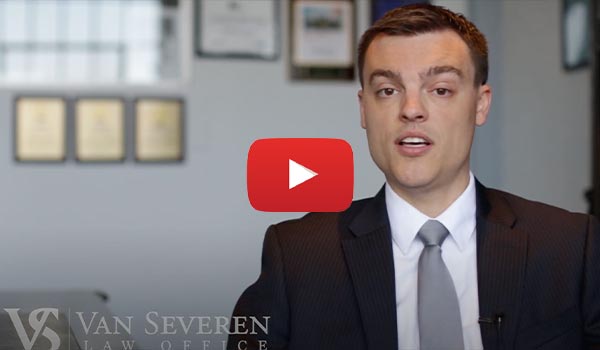
Drunk driving defense attorney Benjamin T. Van Severen discusses OWI defense in Wisconsin.
Common questions regarding OWI charges in Wisconsin
Is an OWI the same as a DUI, OUI, and DWI in Wisconsin?
Wisconsin prosecutors charge operating while intoxicated (OWI) in drunk driving and drugged driving situations. Driving while intoxicated (DWI), driving under the influence of an intoxicant (DUI), and operating under the influence of an intoxicant (OUI) are the names applied to the same conduct in other jurisdictions.
Is a first offense operating while intoxicated (OWI) in Wisconsin a crime?
A first offense drunk driving conviction in Wisconsin is not a crime. It is a forfeiture. Two situations change that. First, if a minor passenger under the age of 16 is in the car when you are arrested, the offense is a misdemeanor. Second, if you injure someone else while committing a first offense drunk driving offense, it is at least a misdemeanor.
It has been ten years since my first offense OWI. Is a second offense OWI a criminal charge?
No. Wisconsin drunk driving law includes a ten year lookback period for second offenses. That means that if you are charged for a second offense, and it has been longer than ten years since your first, the second is not a crime. The count includes prior OWI convictions, PAC convictions, chemical test refusals, and OWI-related revocations, not just prior OWI convictions. This does not apply to subsequent offenses — a third offense is a third offense, regardless of how long it has been.
When does an OWI become a felony in Wisconsin?
A fourth offense operating while intoxicated charge in Wisconsin is a felony. Old law treated fourth offense OWI violations as felonies only if the fourth offense occurred within five years of the third. Now, all fourth offense OWIs in Wisconsin are felonies, regardless of how long it has been.
Do you lose your driver license forever after a fourth offense OWI in Wisconsin?
Yes. Under Wis. Stat. section 343.31(1m)(b), the Department of Transportation permanently revokes the operating privilege of a person whose countable offenses reach four or more. Individuals with a permanent revocation are not eligible for an occupational license. This does not apply if the most recent offense occurred more than 15 years after the one before it. After 10 years of the revocation period (assuming no new offenses and that the person completes an alcohol assessment and any required treatment), a person may apply for reinstatement under Wis. Stat. section 343.38.
Will I need to install an ignition interlock device (IID) after my drunk driving conviction?
First offense cases involving a blood alcohol concentration of 0.15 or higher require installation of an ignition interlock device. Second and subsequent offenses all include an IID requirement, regardless of BAC.
Does Van Severen Law Office offer free consultations for operating while intoxicated (OWI) cases?
Yes. Van Severen Law Office represents defendants throughout Wisconsin facing operating while intoxicated and criminal charges. We offer free consultations to potential clients facing these charges.
Charged with operating while intoxicated in Wisconsin? Call us.
Van Severen Law Office represents drivers throughout Wisconsin facing operating while intoxicated charges. Whether it’s a non-criminal first offense, a misdemeanor, or a felony OWI, we’re in the position to help. We have offices throughout the state and we answer phones 24/7.